
Just move on, they said — K
27 September 2024
K once dismissed mental health struggles as a "fad" — until she realised her pain was hurting those she loved. Read how she found the right support and learned to sit with her feelings.
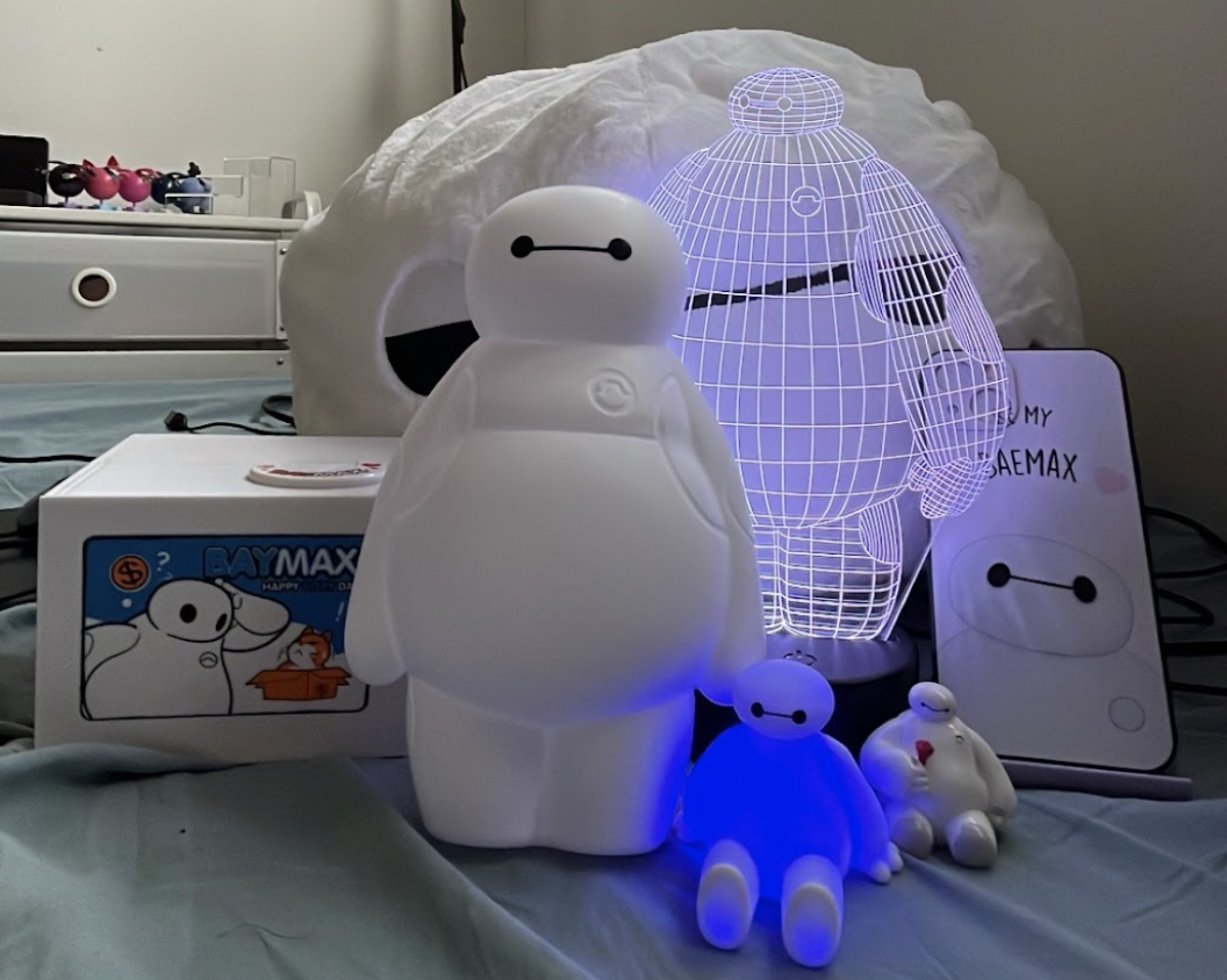
K's safe space is at her partner's house. And the Disney Baymax characters? Oh, they've been her supportive friends since Secondary School.
K didn’t struggle with mental health—or so it seemed.
Back in secondary school, the counsellors were convinced that she ‘looked fine’. They often told her to ‘move on’ instead of offering her the right support. They dismissed her feelings even though she was ‘internally combusting’ all the time.
“Occasionally, I would, out of nowhere, break down and cry... then I would just forget about it. I tried my best to avoid the bad feelings."
As for mental health, it was simply not something she even believed in, back then.
“I thought it was quite bullshit - for lack of a better word, but I thought it was a fad. I thought it was like something that people just say,” she recalled of her earlier days.
Change only came later on, after speaking to her family and partner. K’s behaviour had begun to affect those around her, and she realised that other people were getting hurt because she wasn’t taking care of herself. Her desire to care for others led her to find better support for herself.
“My current partner said something along the lines of he didn't do anything wrong but somehow he's paying for the sins of the people who treated me badly in the past,”
The first mental health provider she came across had a one year waitlist. Luckily, her mom came across Care Corner, a social service agency linked to Insight, a Youth Intervention Team (YIT) under Care Corner. They were able to swiftly pair K with a social worker and a counsellor.
“The social worker began by hearing me out and taking notes. She would also do weekly check-ins to see if I was okay,” she explained, “The counsellor takes more proactive steps to make sure I develop good mental health habits.”
These mental health practices include things like journalling, emotion wheels and taking a break. The counsellor also imparted to K the importance of giving herself a chance to recognise and be with her feelings.
“Usually the counselling time is my only space to seek and feel and just cry. In day-to-day life I dont give myself the space and permission to do so. So she helps me to learn to sit with my feelings. Something I was very uncomfortable with, at first,” she explained.
The counsellor also taught her to differentiate between thoughts and feelings, as well as how to deal with her mental health ‘spirals’.
“One session I kept telling myself I’m not good enough. She stopped me there and told me: ‘Truthfully, I don't think you can carry on like this and I know you know as well.’ I had to stop everything and just rest for that day.”
Today, K sees her counsellor once every 3 weeks. When she’s not, K makes sure she has time every night to connect with her feelings and to process them. She is also learning how to understand and communicate her emotions, instead of simply denying their existence entirely.
“The biggest change was that I'm less afraid of talking about how I'm really feeling... I'm able to tell my partner 'I'm upset because you did this’,” she elaborated.
Once a week, she also sets aside a day to be fully present with the things—and the people—she loves.
“Having good mental health helps me to look forward to the future instead of fixating on the past, what keeps me going is the people I love, that matters to me a lot.”
Got a story? Share it with us at aicrealspace.sg@gmail.com (opens in new tab) to lend strength to someone in need.